Studio ventilation has been upgraded and increased. Online mixing, mastering & beat-making is available.
Watch out for investment scammers claiming association with Current Sound, click here to report scams.
Recording Studio + Music Production, Los Angeles
Our work - Songs:
Tom Watson
Music Producer
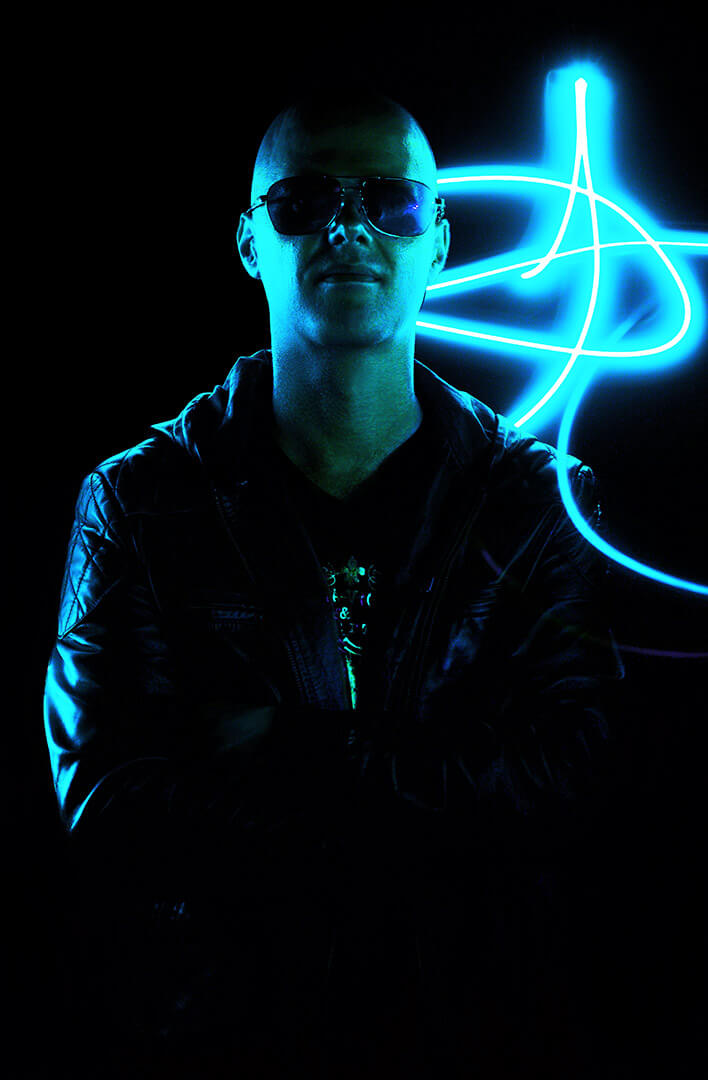
Tom Watson, Founder of Current Sound, is a Los Angeles Music Producer, Beat-Maker, Pianist & Recording Engineer with 19 years of experience operating his own recording studio.
In 2019 he relocated Current Sound to his own custom designed recording studio in Hollywood where he records, mixes, produces & creates music from scratch, in person for his Clients.
Tom Watson is an expert in the recording, production, sound design & mixing of modern genres such as hip-hop, R&B, Dance / EDM & Pop / Top 40.
Combined with his deep understanding of music theory & market trends, he works with both signed and unsigned singers, rappers, songwriters & solo artists to create marketable, radio ready & label ready songs.
He also produces & creates music for The Gordon Brothers who have written for artists such as Drake, Rhianna, Chris Brown, Lil Wayne, T-Pain, Akon, Robin Thicke, Usher & other A-list artists.

Gallery

A modern Hip-hop, R&B, EDM & Pop Recording Studio
in the heart of Hollywood, Los Angeles
About
WHEN YOU BOOK A SESSION AT CURRENT SOUND, YOU GET 17 YEARS EXPERIENCE FROM PRODUCER, BEAT MAKER, KEYBOARD, VOCAL TUNING EXPERT, RECORDING, MIXING AND MASTERING ENGINEER, TOM WATSON, INCLUDED IN THE HOURLY AND DAY RATE AT OUR HOLLYWOOD, LOS ANGELES RECORDING STUDIO.
At Current Sound, we’re not you’re average recording studio where you just bring in a beat/backing and record over it. We can make the beat/backing for you on the spot from scratch, playing every single synth, drum and instrument live on the keyboard and MPC without needing to use loops or samples. We can even bring in songwriters behind A-List artists such as Rihanna, Usher, Lil Wayne and many others and hook you up with a killer hook/chorus or to write a full song for you. It’s like signing to a label but without the signing part. At Current Sound, you don’t have to be signed to sound like you’re signed!
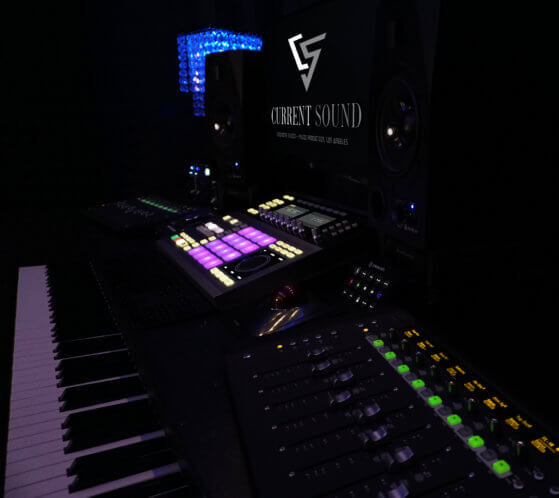
A full Service Recording Studio
Current Sound Hollywood is one of few remaining ‘full service recording studios’ in the US. What does that mean? That means you can literally walk into the studio with nothing more than an idea and walk out with a produced, recorded, mixed and mastered label ready and radio ready song.
We can do everything in house in person with yourself, the artist. From pre-production and composition through to beat-making, electronic music production, sound design, songwriting, arranging, vocal tuning as well as typical recording studio services such as mixing and mastering.
If you just want to record and have a mix done, sure we can do that too.

Custom beats
For a similar price to buying the exclusive rights to a 3rd party beat, the in house music producer and sound engineer Tom Watson can make a custom beat / instrumental for you from scratch on the piano/synth without using any sample or loops, on the spot in the studio with you as well record you and help direct your performance.
Artist Prices & Packages
Current Sound - Hollywood
Artist Package
Payment required on the day- Studio Hire (full day - 8 hours)
- Recording
- Mixing
- Music Production
- Beat Making from scratch
- Graphical Mode Manual Auto Tuning
- Mastering
Artist Hourly Rate
Payment required on the day- Studio Hire (per hour)
- Recording
- Mixing
- Music Production
- Beat Making from scratch
- Graphical Mode Manual Auto Tuning
- Mastering
Private Lessons
Pay as you go or per term- Piano Lessons
- Beat Making Lessons
- Piano & Beat Making Combo Lesson
- Recording & Sound Engineering Lessons
- Composition & Songwriting
- Improvisation
- Ear training & playing by ear
Online Prices
Un-attended prices for those outside Los Angeles
With optional live stream from our studio
Online Mastering
Online Vocal Tuning
Custom Hip-Hop Beat
Rooms
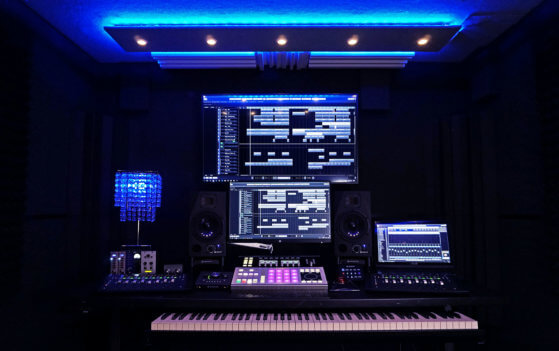
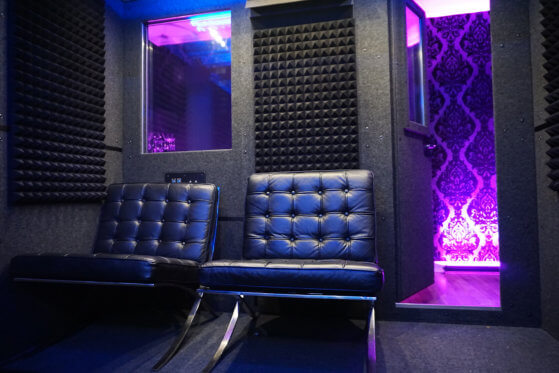
Pictured: Current Sound, Hollywood. Studio A, soon to be renamed to Studio B.
Studio A, B & C
Our recording studio is growing with two new soundproof and acoustically treated rooms in the heart of Hollywood available soon for freelance sound engineers and music producers. Our recording rooms are fully furnished with top notch mixing and recording gear as well as music production tools which can easily be customized to your needs. They competitively priced, built and designed by sound engineer and music producer, Tom Watson.
What makes our rooms great is that they are ultra modern and cater to the what artists are freelance music producers and engineers need the most. Awesome vibes helps artists feel creative space and provides great photo and video opportunities for their social media. While sound engineers and music producers will appreciate the excellent acoustic treatment, soundproofing, superior ergonomics, gear and ultra simple integration for their own laptops, racks and gear.
Music producers and sound engineers can easily plugin their laptop and with just one thunderbolt cable be connected to the entire studio as well as troubleshooting and tech support from the lead/head sound engineer of the studio available on site. You’ll be up and running in minutes, using your DAW and plugins of choice. You can also bring your own interface and gear and we’ll get you connected.
Modern Eucon desks in each room for controlling any DAW. Top of the line Fatar keybeds built into the desks instantly connect to any connected laptop. Custom furniture as well as Argosy Consoles allow music producers and engineers to load up the desks with their own racks and equipment as well as use the any of the mics, racks and cables already in the studio.
Being surrounded by other talented music producers, songwriters working next door in the same facility allows for collaboration opportunities.
Free all day parking and located in the center of Hollywood next door to cafes, bars and restaurants for enjoyment and networking.
Please call for availability, lock-out rates and competitive pricing.
FAQ
Most frequent questions and answers
How much studio time should I book ?
Feel free to call on 310 598-0020 and music producer & sound engineer, Tom Watson, will personally answer or get back to you within 24 hours to help you estimate how much studio time you’ll need for your project. Alternatively, you can email the recording studio with the question and Tom will get back to you.
Does the artist rate and/or label rate prices include a sound engineer ?
Yes, all advertised prices for the artist rate and/or label rate includes music producer & sound engineer, Tom Watson. So not only do you get a sound engineer included but you also get a music producer included too!
What genres do you produce, record and mix ?
Current Sound specializes in modern genres such as Hip-Hop, R&B, Dance/EDM and Pop/Top 40.
Current Sound is located right in the middle of Hollywood, Los Angeles where land and rent is at a premium. In order to keep pricing affordable, the recording studio can record vocals, piano, bass, guitars and has tons of cool synths and electronic drums for modern music production but has no live band room and no space for an acoustic drum kit and/or a full live rock band.
So the studio is an ultra modern recording studio best suited for solo artists such as rappers, singers, songwriters and DJ/Producers as well as mix engineers and producers looking for a space to work from.
The recording studio has everything singers and rappers could possibly want as well as unique services included such as custom music production from scratch, songwriting as well as mixing and mastering all in house available in your session all at an affordable price, in a convenient location. All of the songs on this website were produced, recorded, mixed and mastered by owner and operator, Tom Watson at Current Sound.
Do you do pop/rock ?
For singers and songwriters that want to record more rock based music, although the studio isn’t advertised as a rock studio, it’s still possible as long as you don’t mind the drums being played on the keyboard or MPC in a more hybrid modern style. Examples of this on the playlist at the top of this page would be the pop/rock songs on this page for songwriter Rob Gentilcore that were recorded, produced and mixed at Current Sound. There are also two electro-rock songs on the website the Blur – Song 2 remix and Mick – All the Way.
The song Galaktica – Flock of Planes has acoustic sounding drums that was played by Tom Watson on the keyboard from scratch using sounds from Toontrack Superior Drummer and Addictive Drums. It manages to trick most drummers into thinking it’s a recording of a real drum kit.
The other option is to have Tom Watson draft up a production for you in the studio and have the drums re-recorded in one of the rock studios in LA. Tom can help organize a session drummer for you and a studio if this is something you want to do.
What is the artist rate/package ?
The artist rate is a discounted rate for independent artists but is also available for major label artists at the higher rate advertised here. It gets you recording studio hire plus the lead sound engineer and music producer Tom Watson and all of the services he provides.
With the artist rate, you get everything needed to turn your song or idea into a radio ready and label product.
What makes it perfect for artists and songwriters?
Rather than going to a recording large studio with a large live tracking you won’t use room, a massive mixer and loads of stuff you will never use or need, the artist rate removes elements singers, rappers and songwriters don’t use and adds additional services and skills that want but usually never get. In fact, these extra services aren’t even available at largest recording studios in Los Angeles by their staff.
It is billed just like a regular recording studio, per hour or per day and at no additional cost other than the time it takes us to make it, you can add any extra services you want. Think of it like making an ice cream better and more yummy by adding any extra toppings you want.
What this means?
You can simply have a typical recording and mixing session except that Tom Watson will also direct your performance helping you achieve a better vocal performance. Or you could use the time to make a song completely from scratch and end up with the exclusive rights. It’s up to you. You simply pay for the studio time as you go. You don’t have to use the extra services if you don’t want to, you just have more options available than at a typical recording studio in Los Angeles.
Some people use the artist rate to just have a regular recording and mix.
Others use it to have custom music production and beat-making from scratch tailor made to fit their vocal or ideas. This means you can book the studio to create full songs out of thin air, produced, recorded, mixed and mastered to a final label ready and radio ready product.
What makes the artist rate so unique?
The artist rate package makes Current Sound the only professional recording studio in Los Angeles that you can hire, go to record in, without having anything to record lol… Then leave with a radio ready and label ready song. Everything is done in house, in person.
It helps to have your vocal written prior so you’re not feeling under pressure. Tom can create custom music from scratch to fit your exact vocal melody and/or flow but some people prefer to write in the studio or have an instrumental made first to take home or write over or freestyle over in the studio.
There aren’t any other recording studios in Los Angeles that we’re aware of that offer all the services that we do in person let alone at the one low rate.
More options, if you choose to use them.
With the artist rate, you just have more options. For example, if you’re recording over a beat, even without the track-outs, we can add additional elements over the top. If you have the track-outs, we can remove elements and replay them with better quality sounds using the same melodies or we could play better melodies. We could completely scrap the entire beat/instrumental and whether your rapping or singing, replace the whole instrumental without you having to alter your vocal melody or flow.
Or if you’re a singer/songwriter playing the guitar we could add some piano, keyboards, synths, drums and/or even a full orchestra.
For singers, every note you sing can be tuned one at a time by ear in Graphical Mode in Auto Tune so it’s flawless but un-detectable and natural.
Basically, any idea you have, it can be done and created on the spot for you.
Not only can you use this to help fulfill your vision as an artist but you simply have multiple ways to improve your song far beyond a typical recording and mixing session.
The artist rate at Current Sound is unique, giving you multiple options to sound better beyond the scope of what the top sound engineers and the largest recording studio in Los Angeles can do. All at the one affordable price. It’s best suited for as the title suggests… Artists. As well as songwriters and DJ/producers.
Which studio room will I be in with the artist rate ?
The artist rate gets you the best room and engineer, the same as the major label artist rate. The only difference is the discounted pricing for unsigned/independent artists.
I'm in a band and I need a larger recording studio in Los Angeles that has a live room. Any suggestions ?
Sunset Sound is one block over from Current Sound and they focus more on recording rock and live bands. There rooms are very large, some of the largest around. They bought the land in the 60s so the studio is massive compared to newer recording studios like mine. They’re a little pricey but not too bad considering the size. Last time I checked there were around $850 per day. They have a lot of experience in recording rock bands and many famous bands have recorded there.
How much does it cost for custom music production and/or beats from scratch ?
For unsigned artists, you simply attend the recording studio, Current Sound in Hollywood and pay per hour or per day at the prices above. Custom beats and custom music production is done on the day, in person in the recording studio.
For major label artists, click here for pricing.
The artist rate is the same for all services whether it is recording, mixing or custom music production and custom beats from scratch.
How much it will cost will depend on how long it takes to create. On average, custom beats and music production for most songs are done in a half day to full day in the recording studio for the production. Generic songs are quicker to produce than something more original. Most of the time, you can get an original production/beat created that day with all the parts created and played by music producer, Tom Watson.
If it is more of an acoustic based song and session musicians are required, such as live acoustic drums or full live bands, it’s going to take longer and cost more due to having to cover the session fees. For most songs, such as those on the Current Sound website, Tom Watson can play all of the parts and instruments at no additional cost to the hourly rate and day rate. So if you’re doing what we specialize in such as Hip-hop, R&B, Dance/EDM, Pop/Top 40, most likely session musicians aren’t required and you simply pay the hourly rate and day rate.
Recently, due to Covid-19, custom beats are available online. Click here for online prices.
Do I get the exclusive rights to the production / custom beats that are created in a recording session ?
If you’re unsigned, yes, you get the exclusive rights at no additional price than paying the hourly rate or day rate in the studio while Tom Watson works on your beat/custom music production.
For major label artists; Tom Watson generally takes 50% of the songwriting when writing and creating the entire instrumental/beat from scratch.
How much do you charge for mixing ?
Simply book the studio per hour or per day. On average, it takes around 4 hours to mix most songs not including editing, vocal tuning and/or sound design and sample replacement.
One of the main advantages of having the song mixed at Current Sound is, if it wasn’t recorded and produced here, Tom Watson can also upgrade the sound design by replaying the drums and instruments by ear rather than mixing sub-par sound design. Doing this though, can add to the time required for mixing. This isn’t needed is Tom produced the song from scratch at Current Sound in the first place.
Mixing is also available online at similar pricing and is recommended for those who are outside Los Angeles and can’t make it to the recording studio in person. Visit the online services page for pricing and more information
How much do you charge for vocal tuning ?
Un-detectable Graphical Mode Auto Tuning
Recommended for professional singers or new artists. Vocal tuning, such as graphical mode, one note at a time Auto Tuning by ear, is included in the artist rate. Simply pay the studio time while the tuning is taking place. On average it takes around 4 hours to tune a vocal. This service is also available online.
This is not your typical, automatic or fast tuning you’re used to hearing engineers throw on. This is how major label artists are tuned. When done correctly, the tuning will be undetectable and the vocal will just sound flawless, like it was sung perfectly in the first place. This is how all the big name singers are tuned. Visit the services page to hear some before and after vocal tuning examples of ours.
Drake Style Rap-Sing Tuning
Some people want more of that obvious tuned sound, especially rappers doing that Drake rap-sing style. This is usually better done in Melodyne. It often takes 3-4 hours or less due to their being more syllables to tune, even though the melodies are more simple. The more of the T-pain, heavier tuned sound you want, the quicker it is. If you want that heavy T-pain like sound, it might only take an hour.
T-Pain Style Auto Tuning
If you’re singing accurately, this can be done instantly in Auto Mode. However, if for more control, closer to how T-Pain actually does it, Auto Mode and Graphical Mode can be combined using the import auto function. The latest version of Auto Tune also has Auto Tune 5 mode which although is less accurate, is better for getting that classic T-Pain, bouncing around, heavy tuned sound. Even in Graphical Mode with import auto, the time to do this is typically minimal. This assumes it was actually sung fairly well. T-pain is still a good singer without Auto Tune. If you’re closer to the wrong note in the scale than the correct one, Auto Mode will throw you to the wrong note. In these cases, it needs to be done completely in graphical mode and will take longer.
Rappers
Most rap that is performed well and edited correctly doesn’t need to be tuned however, if you’re doing Dancehall style rap where you’re rapping an actual note, it should be tuned however, it doesn’t usually take more than an hour since it’s usually just one note and is only light tuning.
Tuning can be useful for rap sometimes but it’s usually more subtle and doesn’t take long.
If you’re rapping a hook and that hook is on a melody, for example, more Eminem choruses, sure this should be tuned. It’s probably also doubled. Those doubles should also be tuned. This is best done in graphical mode and can take anywhere from 1-3 hours depending on whether or not the choruses and doubles are the same for each chorus or they are copy and paste identical in each chorus. If they’re all the same, maybe it will take less than an hour.
How much do you charge for mastering ?
Present prices are $120 per song. The price is the same for attended or unattended mastering sessions.
A quick master can be done in the studio during the session on the day at the hourly rate and will be cheaper.
Proper mastering is best done for the very final version of the song that you’re going to release prior to uploading it for digital distribution.
Can I book the recording studio today ?
Often the studio is booked 1-2 weeks in advance but it doesn’t hurt to ask. You can call the recording studio on 310 598-0020. You’ll find being a music city, the best recording studios and sound engineers in Los Angeles are often booked in advance so calling recording studios at the last minute and just booking whatever studio and engineer is available increases your chances of going to a sub-par studio and mix engineer. Even if the recording studio has amazing credits and gear, the mix engineer makes a massive difference to the sound of the end product. It pays to be a little patient to get a better end product since the music industry is so competitive.
The head engineer Tom Watson, usually answers all the calls to offer a personalized service. If you don’t get through right away, please leave a voicemail or send an email using the form below.
I'm confused, how does the recording studio work ? What's with these extra services ?
It’s similar to a regular recording studio in that you just pay per hour or per day while Tom Watson works on your song. The only difference is, extra services are available. The studio hire is advertised with an engineer and music producer included and you have the option of using extra rare services such as custom beat making and music production from scratch as well as directing your vocal performance and vocal tuning. No matter which service is being provided, recording, editing, vocal tuning, piano/keyboard session work, beat-making, mixing, you pay the same hourly rate in the studio while Tom Watson works on your song. If you’re unsigned, you get the exclusive rights to the music and instrumental/beat.
Current Sound is a rare and unique recording studio in Los Angeles where you can literally walk in with nothing more than an idea and leave with a finished, produced, mixed and mastered, radio ready and label ready product.
However, all of those extra services are optional, you can of course just book it like a regular recording studio to record over a beat/instrumental, record a song or hire the studio and the engineer for mixing and mastering.
You can also hire the studio without an engineer. Although, the advertised prices include an engineer. Call or send an email for prices without an engineer.
I'm a freelance engineer, can I book the studio without an engineer ?
Yes. You can book the recording studio either by the hour, day or month. We have 3 separate furnished soundproof mix, production and recording rooms in the middle of Hollywood that can be adapted to your needs to integrate your own gear. On site tech support from the lead/head engineer will have you up and running in minutes. One thunderbolt cable and a few minutes of us installing drivers on your laptop and you’ll be connected to the whole studio. Our gear and Eucon desks allow you to use any DAW and any OS. Please call 310 598-0020 for availability and pricing or use the contact form.
Is smoking allowed ?
Smoking inside the premises is not allowed. This is a non-smoking facility. You can take a smoke break outside in our private patio area. Just keep the doors closed.
The studio is smoke free for the following reasons:
- Smoke degrades and damages studio condenser microphone capsules and gear. Keeping the studio smoke free ensures you get the best possible recording quality.
- Soundproof rooms are air-tight. That means smoke lingers in recording studios even more than houses and other businesses.
- Although Current Sound specializes Hip-hop, we also do R&B and other modern genres. Lingering smoke in the studio irritates and inflames vocal chords, resulting in a raspy voice, reduction in clarity and in the ability to hit higher notes. This often isn’t a concern for most male rappers where a raspy and lower range voice might be a good thing. However, most female singers want to record in a smoke free studio so they can retain their vocal range, clarity and not cause damage to their vocal chords. Since smoke lingers in recording studios, all sessions must be smoke free as to not irritate the next vocalist.
- The head engineer, producer and studio manager, Tom Watson, is asthmatic and couldn’t let you smoke in the studio even if he wanted to. For this reason alone, Current Sound in Hollywood will always be smoke free.
So although we have nothing against you smoking, you just can’t do it inside the facility. The patio is conveniently located behind the control room couches where you can smoke.
What's with the higher rates for corporations and major labels ?
At Current Sound we believe in full transparency. Unlike most of the large recording studios that hide their rates, we have transparent pricing advertised directly on the our website. We think you’re smart enough to understand. So let us explain…
The artist rate on the Current Sound website is the discounted rate for independent artists.
The corporate and major label rate is the full rate.
The main difference between the artist rate and the corporate/label rates is that the artist rate is due in person on the day at the end of the session. The corporate/label rates are invoiced 14 days net. Since independent artists increase cash flow and have minimal pre-session and post-session admin needs, we give them a discount.
The pricing on the website is competitive to attract new artists. For this reason, the discounted artist rate is advertised more prominently. The major label and corporate rates are the full, non-discounted rates. The reality is that most of the large recording studios offer a discount for independent artists but it’s not always advertised. The discounted rate is simply aimed at increasing cash flow which is important since recording studios have ongoing costs.
The full rate allows the studio to provide the following at no additional cost:
- Admin
- Communication with the lead sound engineer prior to the session for both the label and artist(s)
- Pre-loading of files and scripts
- After the session communication regarding revisions, bounces, changes
- Contract & agreement signing
- 1099-MISC forms
- Invoicing and deferment of payment of sessions fees for 14 days
So the full rate allows us to provide you with better customer service to ensure a smooth running session with prior communication, post communication, admin needs and is payroll friendly.
For those that don’t have the same requirements, for example independent artists, they can pay the advertised artist rate/discounted rate on the day in the studio instead.
I called but didn't get an answer. Why ?
The Current Sound recording studio is owned and operated by Music Producer and Sound Engineer, Tom Watson. In order to offer a personalized experience, Tom likes to answer each phone call and email so he can discuss your project in detail, answer any questions you might have as well as help you estimate studio time. This means, if he’s in the middle of a recording session, he might not be able to answer. Just leave a voice mail or send an email via the form below and in most cases he’ll get back to you within 24 hours or less.
Which area in Los Angeles is your recording studio located ?
The recording studio and music production company Current Sound is located in the heart of Hollywood, Central Hollywood, Los Angeles, CA 90028 just 5 minutes walk from the Walk of Fame and the Musicians Institute. On-site Parking is provided. Booking is essential. There are plenty of great cafes and food places within a very short walking distance such as the Hard Rock Cafe, Mel’s Diner, iHop, Fat Sals, Chick-fil-A, Fat Tomato Pizza and a few over-priced hipster cafes lol.
Do you have parking ?
Yes, there is one off street parking space included/available. There is also free un-timed street parking available all day and you can usually find a space during business hours.

Contact: Tom Watson
Studio: Current Sound
T: (310) 598-0020